

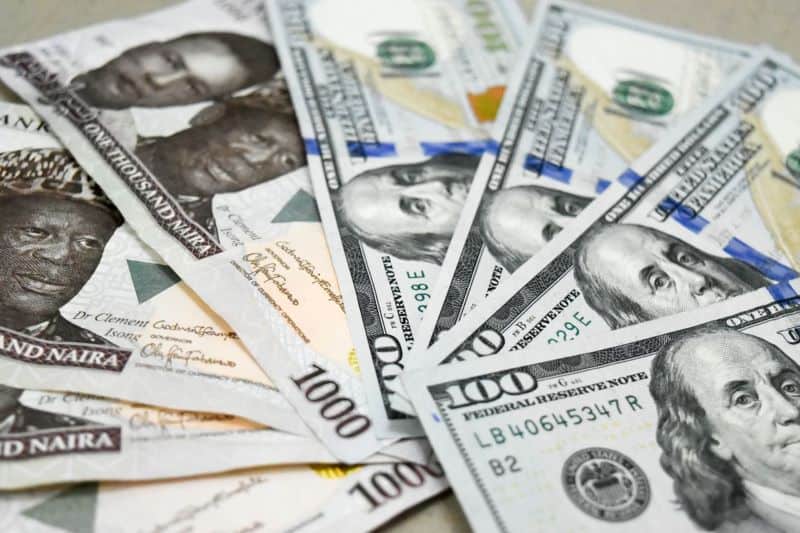
The naira fell 0.99 per cent against the dollar at the official Nigerian Foreign Exchange Market last week, closing at N1,456.72 on Friday. It had traded at N1,442.43 the week before. In the parallel market, the currency ranged between N1,470 and N1,475 per dollar.
Traders saw the naira swing between N1,440 and N1,460 at the official window. Softer dollar inflows clashed with stronger demand from buyers. The black market mirrored this, with a slight 0.20 per cent drop to N1,475.
Strong early buying from investors seeking to cover positions added pressure throughout the week. Central Bank interventions failed to fully ease the strain. The naira weakened steadily from Monday to Friday.
Nigeria’s external reserves rose modestly despite the volatility. They climbed 1.26 per cent to $44.19 billion by Thursday from $43.64 billion on November 14. Stable oil income, better non-oil earnings, and a trade surplus fuelled the gain.

Analysts expect a cautious market next week. Inflows will dictate the pace, not wild bets. Reserves and Central Bank actions should curb sharp swings, though supply shortages linger.
Experts predict short-term steadiness for the naira as buffers grow. Currency basics point to resilience soon. The recent calm has helped slow inflation for six months straight.
The Monetary Policy Committee meets on November 24 and 25. A small rate cut of 25 to 50 basis points seems likely. Such a move could lift bonds but leave shares little changed.
These ups and downs hit families hard, turning simple buys into burdens. Yet rising reserves whisper of steadier days ahead, if leaders steer wisely through the storm.


4 comments
https://shorturl.fm/ma8fy
https://shorturl.fm/hI6aA
https://shorturl.fm/GV6Rx
https://shorturl.fm/CWtIH